Palestinians Cast Historic Local Votes Amid Deep Divisions and War Aftermath
First Gaza elections since 2006 highlight political rifts and hopes for change

LAT Editorial Team

Ad
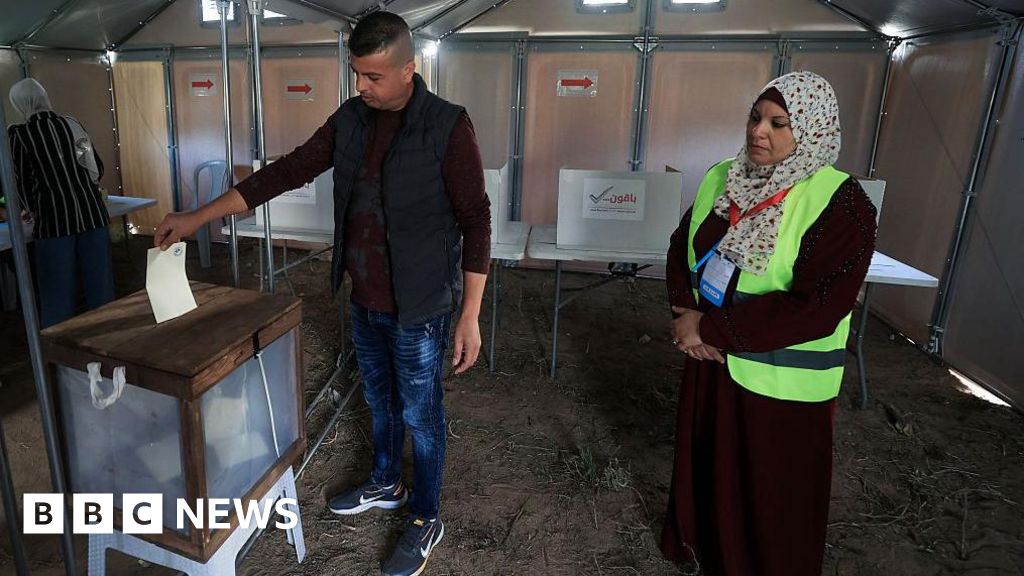
Palestinians across the West Bank and parts of Gaza have taken part in local elections on Saturday, marking the first polls in Gaza since 2006. Despite ongoing tensions and a fragile ceasefire, more than a million voters were eligible to participate, including 70,000 in Gaza’s Deir al-Balah, the only city in the territory where voting was held.
These elections underscore the persistent political divide between Hamas and Fatah, with Hamas barred from standing and several factions boycotting the vote over demands to recognize the Palestinian Liberation Organisation (PLO). The vote reflects both the challenges of Palestinian unity and the population’s desire for democratic expression amid ongoing conflict and occupation.
Ad
Historic Vote in Gaza Amidst War Damage and Political Exclusion
Deir al-Balah, a central Gazan city less damaged by recent conflict, was the sole Gaza location holding elections. Hamas, which controls much of Gaza, was excluded from the ballot, though some candidates were seen as aligned with the group. Hamas police helped secure polling stations, highlighting their continued influence despite political restrictions.
The elections come after years of violence and political strife, including Hamas’s 2007 takeover of Gaza following their 2006 electoral victory, which led to a deep split with Fatah, the dominant faction in the West Bank.
Ad
Fatah’s Dominance and the Boycott of Opposition Groups
Fatah, led by President Mahmoud Abbas, was the only major faction on the ballot across the Palestinian territories. Several groups boycotted the elections due to a law requiring candidates to recognize the PLO as the sole legitimate representative of Palestinians, a condition opposed by Hamas and others.
- Candidates had to commit to recognizing the PLO and its political program.
- Hamas and other factions reject the PLO’s legitimacy and its recognition of Israel.
- Fatah’s uncontested presence in many districts guaranteed their victory.
Ad
Public Sentiment: Hope, Skepticism, and Calls for Peace
Voters expressed mixed feelings about the elections. Mohammed al-Hasayna in Deir al-Balah described the vote as a sign of resilience and a plea for international support to rebuild Gaza after years of war.
"We want the world to help us overcome the catastrophe of war. Enough wars - it is time to work towards rebuilding Gaza."—Mohammed al-Hasayna, voter in Deir al-Balah
Conversely, in the West Bank city of Tulkarem, businessman Mahmud Bader voiced skepticism, highlighting the ongoing Israeli occupation’s control and doubting the elections’ impact on real change.
"The occupation is the one that rules Tulkarem. It would only be an image shown to the international media - as if we have elections, a state or independence."—Mahmud Bader, businessman in Tulkarem
Ad
What These Elections Mean for Palestinian Politics and Future Prospects
The elections highlight the ongoing fragmentation within Palestinian politics, with no unified leadership bridging Gaza and the West Bank. The exclusion of Hamas and the dominance of Fatah reflect deep divisions that complicate efforts toward peace and governance.
As the Palestinian territories face economic hardship, occupation, and the aftermath of conflict, these local elections offer a glimpse of democratic engagement but also underscore the challenges ahead for Palestinian unity and self-determination.
International observers, including the UN, view the elections as a critical opportunity for Palestinians to exercise democratic rights despite the difficult circumstances, signaling a potential, if fragile, step toward political renewal.