Thríhnúkagígur: Explore the World’s Only Accessible Magma Chamber Inside an Icelandic Volcano
Discover the unique dormant volcano near Reykjavík where visitors can descend into a colorful, empty magma chamber.

LAT Editorial Team

Ad
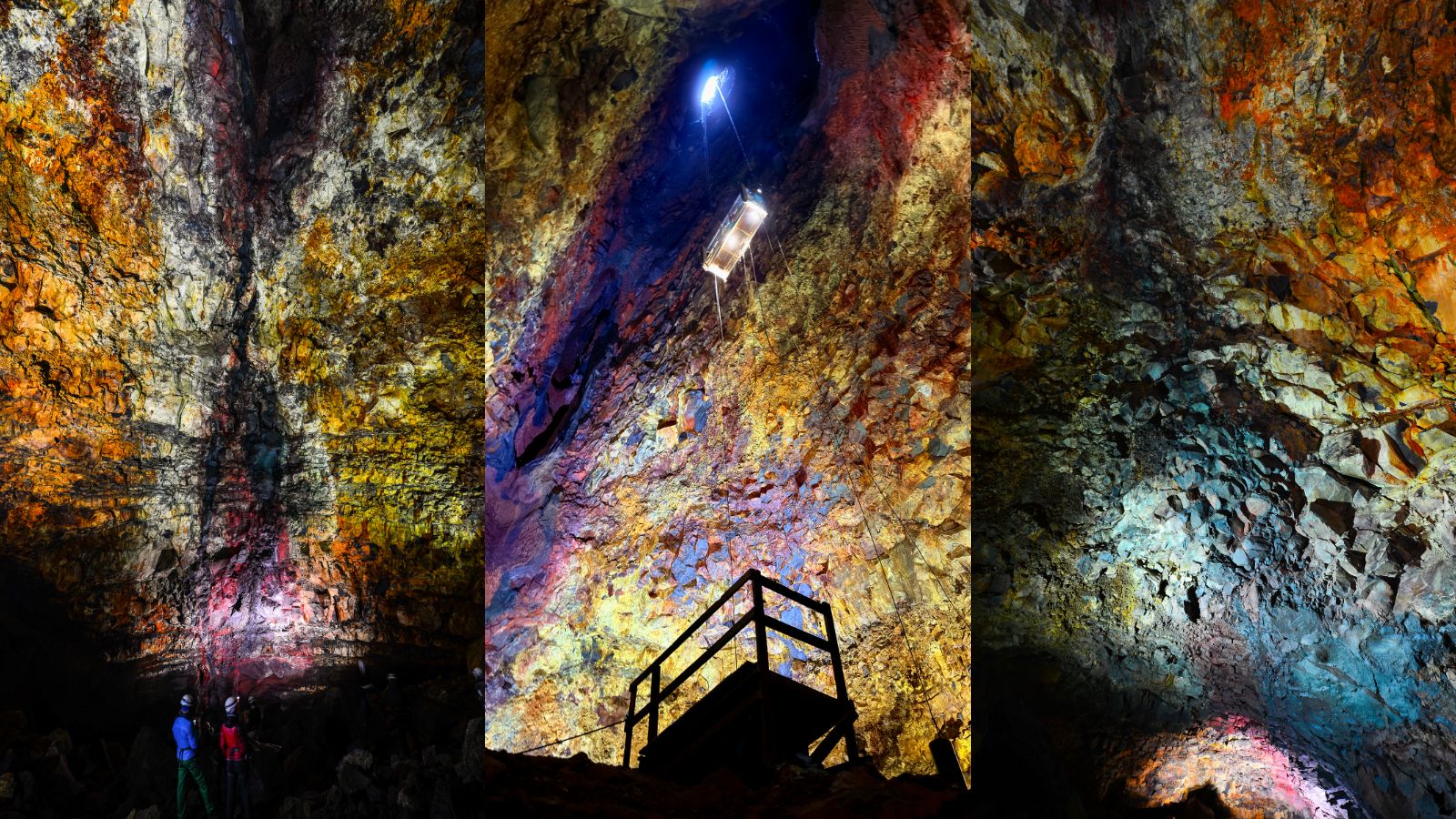
Thríhnúkagígur, a dormant volcano located near Reykjavík, Iceland, offers a rare and breathtaking experience: the chance to descend into its empty magma chamber. This extraordinary geological feature, with walls painted in vivid hues by microbes and sulfur gases, is the only magma chamber on Earth open to human exploration via an open cable elevator.
This unique access provides scientists and tourists alike a glimpse into the inner workings of a volcano’s plumbing system, revealing a cavern that once held molten rock before erupting 4,500 years ago. Understanding Thríhnúkagígur’s unusual empty chamber sheds light on volcanic processes and offers an unparalleled adventure deep beneath the Earth’s surface.
Ad
A Volcano Like No Other: The Empty Magma Chamber
Unlike typical volcanoes where magma chambers solidify underground after eruptions, Thríhnúkagígur’s magma mysteriously vanished, leaving a vast hollow space about 700 feet (210 meters) deep—more than twice the height of the Statue of Liberty including its pedestal. Scientists believe the magma was drawn back into the Earth’s crust, creating this rare empty chamber.
Visitors descend in a metal cage via an open cable elevator installed in 2010, originally for scientific research. Once at the bottom, they can explore the 33,600-square-foot (3,120 square meters) floor of the chamber, surrounded by stunning bronze, indigo, and blue walls shaped by falling rocks, sulfur-rich gases, and microbial life.
Ad
The Science Behind the Colors and Microbial Life
The vibrant colors inside the chamber are attributed to unique microbes thriving in this extreme environment, alongside sulfur gases that paint parts of the cave yellow and orange. Indigo and blue patches come from rocks tumbling off the chamber walls. Though visitors sometimes see steam rising, it’s caused by water dripping onto the chamber’s lamps, not volcanic activity.
"It's like somebody came and pulled the plug and all the magma ran down out of it.",—Haraldur Sigurdsson, volcanologist and professor emeritus
Ad
The Three Peaks and Thríhnúkagígur’s Volcanic History
Thríhnúkagígur, meaning 'Three Peaks Crater,' features three aligned peaks, each formed during different eruptions spanning 50,000 to 4,500 years ago. The youngest peak hosts the entrance to the magma chamber, while the oldest formed under an ice sheet, composed of sharp volcanic glass fragments.
Despite its location on the Mid-Atlantic Ridge, where tectonic plates diverge, Thríhnúkagígur is unlikely to erupt soon, making it a safe and fascinating destination for visitors and researchers.
Ad
What the Future Holds for Thríhnúkagígur
As the only volcano with an accessible magma chamber, Thríhnúkagígur continues to attract scientists eager to study its unique geology and microbial ecosystems. For tourists, it offers an unforgettable journey into the Earth’s fiery past, blending adventure with scientific discovery.
Ongoing research may reveal more about why the magma disappeared and how such empty chambers form, potentially reshaping our understanding of volcanic activity worldwide.