Venezuela’s Political Prisoner Amnesty Faces Abrupt Halt Amid Rights Group Outcry
Interim President Delcy Rodríguez signals an end to prisoner releases, sparking backlash from human rights advocates

LAT Editorial Team

Anuncio
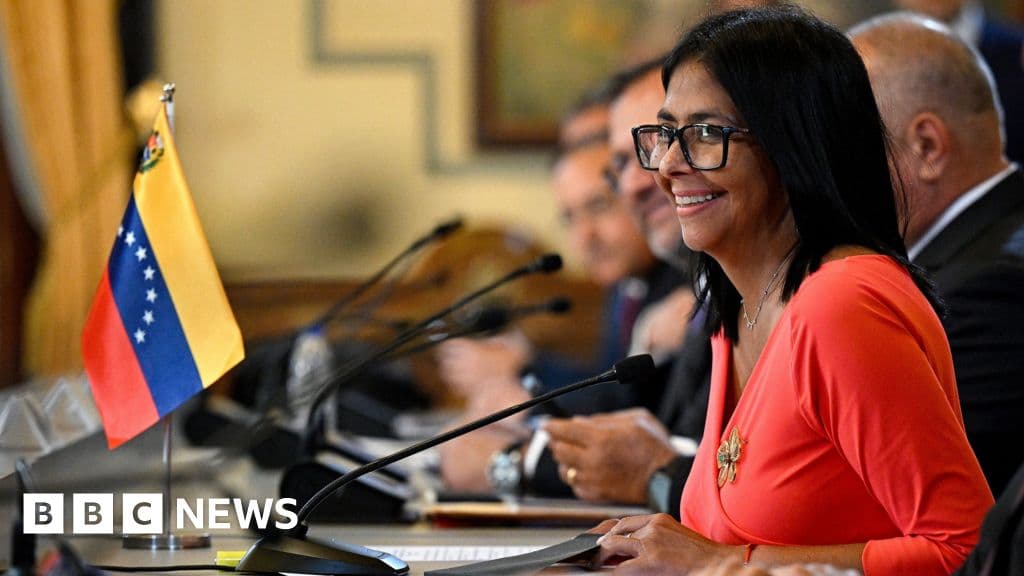
After just nine weeks of operation, Venezuela’s political prisoner amnesty program is reportedly coming to a close, according to interim President Delcy Rodríguez. The initiative, launched by the National Assembly, has freed nearly 500 political detainees but still leaves many behind bars.
Human rights organizations have condemned Rodríguez’s announcement, arguing that the move is unconstitutional and undermines efforts toward political reconciliation. The controversy highlights ongoing tensions in Venezuela’s fragile political landscape amid international scrutiny and US involvement.
Anuncio
A Promising Amnesty Program Faces an Unexpected End
The amnesty law, introduced by Venezuela’s National Assembly and championed by Jorge Rodríguez, Delcy’s brother, aimed to release thousands of political prisoners. Nearly 1,557 detainees applied, with 473 confirmed freed by prisoner rights group Foro Penal as of late April. Despite these numbers, over 500 political prisoners remain incarcerated, fueling criticism of the program’s effectiveness.
Delcy Rodríguez recently declared that the amnesty scheme was “coming to an end,” claiming it had been “very successful” and that other mechanisms would address remaining cases. However, rights groups argue that only new legislation or a referendum could legally terminate the amnesty, which has no set expiration.
Anuncio
Human Rights Groups Decry Move as Arbitrary and Unconstitutional
Foro Penal’s vice-president Gonzalo Himiob criticized the government’s justice system for lacking the will and capacity to properly implement the amnesty law. He emphasized that ending the program without legislative approval violates its principles and undermines justice.
“The bodies of the administration of justice, which are part of the same repressive system that made an amnesty necessary, never truly had either the willingness or the capacity to apply the amnesty law while respecting its purpose or principles.”—Gonzalo Himiob, Foro Penal vice-president
Similarly, watchdog group Provea condemned the decision as “arbitrary and unconstitutional,” warning it hampers the fragile process of coexistence and peace in Venezuela. The Justice, Encounter and Pardon group called the announcement a “grave assault on the rule of law,” lamenting that the law had become more political rhetoric than a genuine tool for freedom.
Anuncio
Political Context: US Support and Maduro’s Legacy
Delcy Rodríguez, once Nicolás Maduro’s vice-president, now leads an interim administration that has surprisingly gained backing from former US President Donald Trump. This support came after US forces detained Maduro in January, with Rodríguez’s government making prisoner releases a key concession to Washington.
Despite this, critics argue that Rodríguez’s administration prioritizes short-term stability over democratic progress. Opposition leader María Corina Machado, sidelined by the US in favor of Rodríguez, remains a vocal advocate for free elections, which have yet to be seriously discussed since Maduro’s capture.
Anuncio
What Lies Ahead for Venezuela’s Political Prisoners?
With the amnesty program winding down, uncertainty looms over the fate of hundreds of political prisoners still behind bars. Human rights groups urge the government to uphold legal processes and explore alternative avenues to ensure justice and reconciliation.
Meanwhile, international observers watch closely as Venezuela navigates a complex transition phase. US Secretary of State Marco Rubio has described the current period as a prelude to “free and fair” elections, but concrete steps toward democratic reform remain elusive.