Malaria Shaped Early Human Migration Patterns Across Africa for Over 70,000 Years
New research reveals prehistoric humans avoided malaria hotspots long before farming began.

LAT Editorial Team

Anuncio
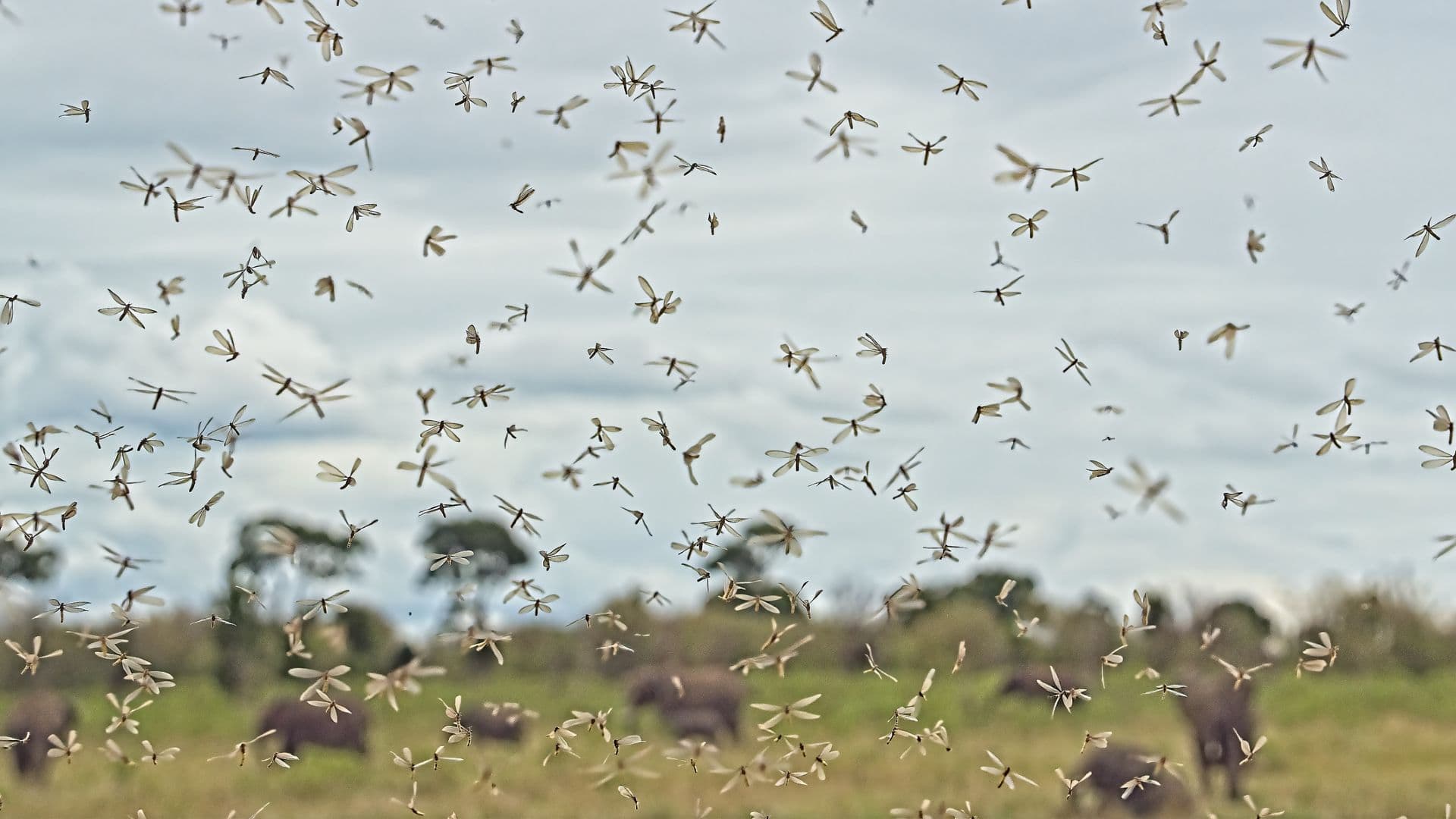
A groundbreaking study reveals that malaria, transmitted by Anopheles mosquitoes, influenced where prehistoric humans chose to settle across sub-Saharan Africa. This challenges previous beliefs that early human migrations were primarily driven by agricultural developments.
By analyzing climate data and malaria prevalence models spanning 74,000 years, researchers found that early hunter-gatherers actively avoided regions with high malaria risk, shaping human population structures well before the advent of farming.
Anuncio
Rethinking the Role of Disease in Human Prehistory
For decades, scientists assumed infectious diseases like malaria became significant only after humans began farming and living in dense settlements. However, this new study, led by Eleanor Scerri of the Max Planck Institute, reveals that malaria was already a major factor influencing human behavior tens of thousands of years ago.
"We can no longer ignore diseases in the deep human past. They have transformative impacts that helped shape who humans are today.",—Eleanor Scerri, Archaeological Scientist
Anuncio
Mapping Malaria’s Ancient Footprint
Researchers reconstructed sub-Saharan Africa’s climate over the past 74,000 years and developed a 'malaria stability index' based on modern epidemiological data and mosquito habitat suitability. Comparing this with archaeological maps of early human settlements, they discovered a clear pattern: prehistoric humans avoided areas with persistent malaria risk.
- Climate data was analyzed in 1,000 to 2,000-year intervals.
- The malaria stability index factored in the presence of Anopheles mosquitoes, which transmit Plasmodium falciparum.
- Avoidance of malaria hotspots influenced human population distribution by at least 13,000 years ago.
Anuncio
Central West Africa: A Historical Malaria Hotspot
The study highlights Central West Africa as a region heavily affected by malaria, a trend that continues today. Limited archaeological evidence from this area suggests fragmented populations, likely due to the disease’s impact on settlement patterns.
"Populations in Central West Africa were highly fragmented, which aligns with the idea that malaria shaped human spatial organization.",—Andrea Manica, Evolutionary Ecologist, University of Cambridge
Anuncio
Implications and Future Directions in Disease and Human Evolution Research
This pioneering research opens new avenues for exploring how vector-borne diseases influenced human evolution and migration. The team plans to extend their methodology to study other ancient diseases, potentially reshaping our understanding of human history.
"We have shown it is possible to track diseases back in time and assess their impact on past human habitation.",—Andrea Manica
Experts outside the study, like Simon Underdown from Oxford Brookes University, agree that disease has always been a critical factor shaping human movement and survival.