Groundbreaking Surgery at 25 Weeks Saves Baby from Fatal Lung Disorder
Doctors perform unprecedented in-womb operation to rescue fetus with rare airway blockage

LAT Editorial Team

Anuncio
At just 25 weeks gestation, doctors undertook a daring surgical procedure to save baby Cassian from a rare and deadly lung condition known as congenital high airway obstruction syndrome (CHAOS). The operation involved partially delivering the fetus from the womb to drain fluid from his lungs before returning him to continue developing safely inside the uterus.
This pioneering intervention challenges traditional timing for such surgeries and offers new hope for fetuses diagnosed with CHAOS, a condition that is typically fatal without treatment. Cassian’s survival could pave the way for future early interventions in similar high-risk pregnancies.
Anuncio
A Rare and Life-Threatening Diagnosis
During a routine second-trimester ultrasound at Orlando Health Winnie Palmer Hospital, doctors discovered that Cassian’s lungs were dangerously overinflated, compressing his heart. This indicated CHAOS, a rare disorder affecting 1 in 50,000 pregnancies, where a blockage in the windpipe traps lung secretions, causing swelling and heart complications.
Without intervention, CHAOS is almost always fatal. The blockage in Cassian’s windpipe was a thick membrane too large for standard minimally invasive laser treatment, prompting doctors to consider alternative approaches.
Anuncio
A High-Stakes Surgical Innovation
Typically, the ex-utero intrapartum treatment (ExIT) procedure is performed near full term (37-39 weeks), delivering the fetus’s head and neck first to insert a catheter that bypasses the airway obstruction. However, Cassian’s heart was failing early, and waiting was not an option.
At the urging of Cassian’s parents, surgeons performed the ExIT procedure at just 25 weeks. They partially delivered Cassian’s head, neck, and shoulders, inserted a catheter to drain lung fluid, then carefully returned him to the womb with the catheter secured in place for the remainder of the pregnancy.
"When you hear the parents say something like, 'We know this may not work, but if it helps another child, it’s worthwhile,' that’s incredibly magnanimous," said Dr. Emanuel Vlastos, one of the fetal surgeons.
Anuncio
Balancing Risks for Two Lives
Operating on a fetus this early involves complex risks to both mother and child. General anesthesia was used to sedate both, preventing the fetus from attempting to breathe prematurely, which could have disrupted the pregnancy.
The surgical team had to carefully manage uterine relaxation to avoid premature labor and hemorrhage, while ensuring the catheter’s balloon did not damage Cassian’s developing windpipe or blood vessels.
"It’s a tightrope walk, sometimes for several hours, while two lives hang in the balance," explained Dr. Cole Greves, one of the surgeons.
Anuncio
A Hopeful Outcome and Future Implications
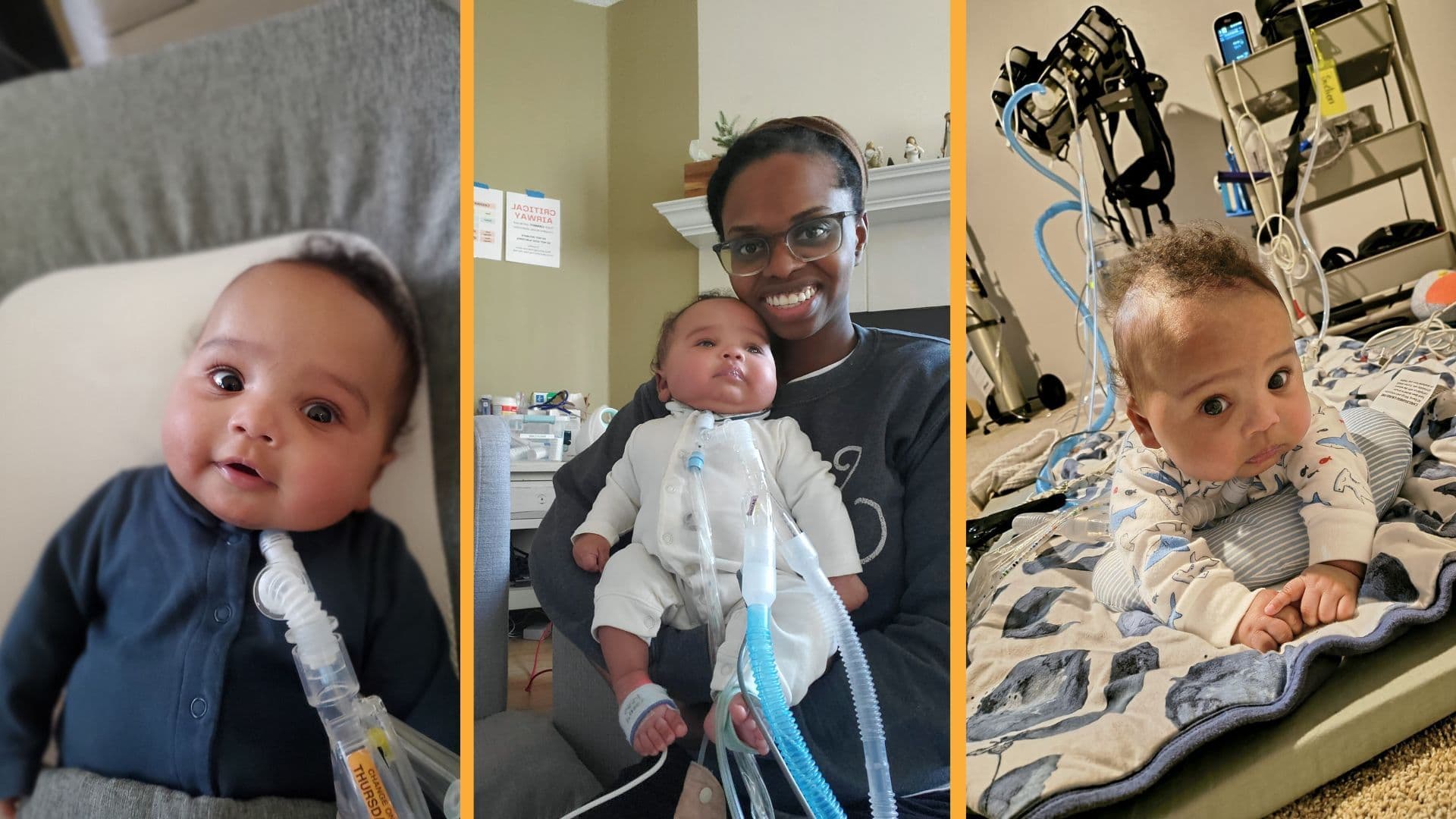
Six weeks after the surgery, at 31 weeks gestation, Cassian was delivered via planned ExIT. The catheter was replaced with an intubation tube to support breathing. Though premature, Cassian is currently being weaned off ventilator support and will require further surgery to clear his airway obstruction.
This unprecedented early intervention demonstrates that lifesaving fetal surgery can be performed well before full term, offering new possibilities for treating CHAOS and similar conditions. Experts emphasize the need for clinical trials and collaboration among fetal surgeons to refine techniques and improve outcomes.
"They never stopped asking, 'What else could we try?' That mindset made all the difference," said Dr. Greves.