Inside Iran’s Power Struggle: Who’s Really Calling the Shots Amid War?
As Iran faces war and uncertainty, the question remains: who truly leads the nation?

LAT Editorial Team

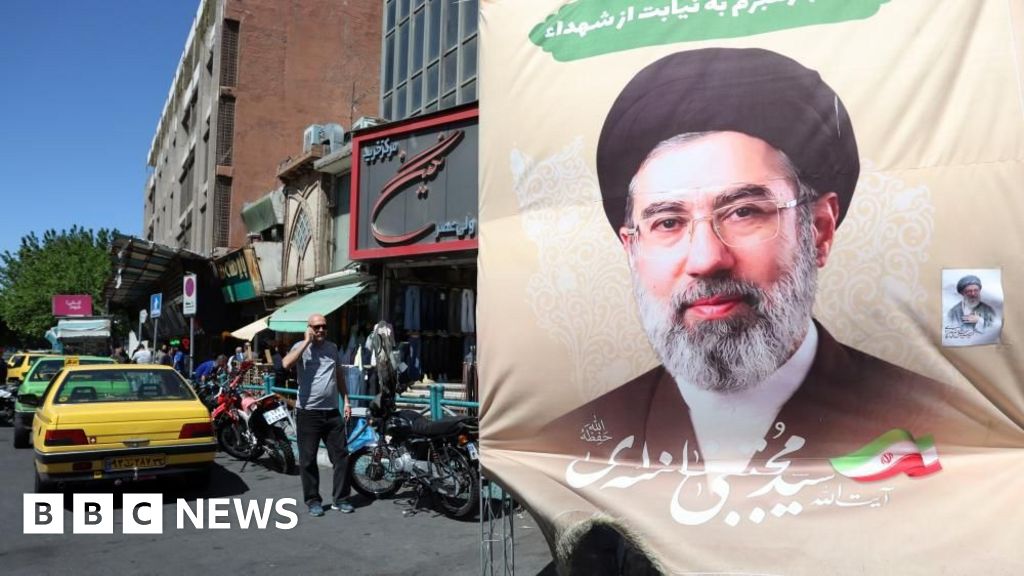
Since the outbreak of war involving Iran, the United States, and Israel, a critical question has gripped observers and citizens alike: who is actually in charge of Iran’s decision-making? Officially, Mojtaba Khamenei succeeded his father as supreme leader, a role traditionally holding ultimate authority over war, peace, and national strategy. Yet, his absence from public view and limited direct communication have cast doubt on the clarity of leadership.
This leadership ambiguity matters deeply as Iran navigates a complex conflict with global implications. The fractured nature of Iran’s power structure complicates diplomatic efforts, military actions, and internal governance, raising concerns about the country’s ability to present a unified front or coherent strategy during this critical period.
The Invisible Supreme Leader: Mojtaba Khamenei’s Elusive Role
Mojtaba Khamenei has not appeared publicly since assuming the supreme leadership after his father’s death on February 28, the war’s first day. Reports suggest he sustained injuries during initial strikes, possibly affecting his ability to communicate and lead. Unlike his father, who used public appearances and speeches to assert control and mediate between factions, Mojtaba’s silence has created a leadership vacuum that fuels uncertainty about who truly directs Iran’s war efforts.
Diplomacy in Limbo: Government Officials Without Clear Authority
While Iran’s Foreign Minister Abbas Araghchi and President Masoud Pezeshkian represent the country in diplomatic talks, their influence appears limited. The delegation is led by Parliament Speaker Mohammad-Bagher Ghalibaf, signaling a fragmented approach. Araghchi’s inconsistent messaging about the Strait of Hormuz’s status highlights the disconnect between diplomatic channels and military decisions, underscoring the lack of a unified strategy.
The IRGC’s Expanding Power: Military Actions Driving the Crisis
Control over critical strategic points like the Strait of Hormuz lies with the Islamic Revolutionary Guard Corps (IRGC), led by Ahmad Vahidi. The IRGC’s operational autonomy has grown, with military actions often preceding political or diplomatic responses. This shift places significant power in the hands of military leaders operating behind closed doors, complicating efforts to coordinate a cohesive national strategy.
Mohammad-Bagher Ghalibaf: The Parliament Speaker’s Rising Influence
Former IRGC commander and current parliament speaker Mohammad-Bagher Ghalibaf has emerged as a prominent figure, actively engaging in negotiations and public communication. Despite his visibility, Ghalibaf’s authority remains ambiguous, as he claims to act in line with Mojtaba Khamenei’s wishes without clear evidence of direct coordination. His pragmatic framing of the conflict contrasts with hardline resistance to negotiations within conservative circles.
A System Holding Together Amid Uncertainty
Iran’s political system is functioning but lacks clear, centralized direction. The supreme leader’s authority is present but not overtly exercised; the presidency aligns with regime goals but does not lead; diplomacy is active yet indecisive; and the military wields key levers without a public strategist. This fragmented power dynamic allows Iran to maintain control and act on multiple fronts but hampers its ability to project a unified strategy during a critical moment.
"There is no such thing as a hardliner or moderate in Iran - there is just one nation, one course."—Iranian leadership message to citizens