Europe’s NATO Allies Rally Behind Spain Amid US Threats Over Iran Stance
Tensions rise as leaked Pentagon email hints at punitive measures against Spain, sparking a united European defense response

LAT Editorial Team

Ad
A leaked Pentagon email suggesting the US might punish Spain for its refusal to support US-Israeli military actions against Iran has ignited a fierce backlash among Europe’s NATO allies. The email reportedly proposed suspending Spain from NATO and barring it from key roles, a move that has no legal basis under NATO treaties and requires unanimous consent.
This incident highlights growing strains in transatlantic relations amid ongoing crises, including the war in Ukraine and the energy crisis. European leaders at a recent summit in Cyprus swiftly defended Spain, emphasizing NATO’s consensus-driven nature and rejecting any notion of expelling a member, underscoring the alliance’s fragile unity in the face of external threats.
Ad
Leaked Pentagon Email Sparks Diplomatic Firestorm
The controversy erupted when Reuters revealed an internal US Pentagon email suggesting punitive actions against Spain for its opposition to US-Israeli strikes on Iran. Spain’s Prime Minister Pedro Sanchez had openly criticized the attacks as illegal and denied US forces access to Spanish bases for operations against Iran. The email also hinted at possible restrictions on Spain’s participation in NATO roles.
However, NATO’s founding treaties contain no mechanism to expel members, and any restrictions would require unanimous agreement among all member states, making such threats largely symbolic. Spain dismissed the email as a misunderstanding of NATO’s structure and reaffirmed its commitment to the alliance.
Ad
European Leaders Unite to Defend Spain and NATO’s Integrity
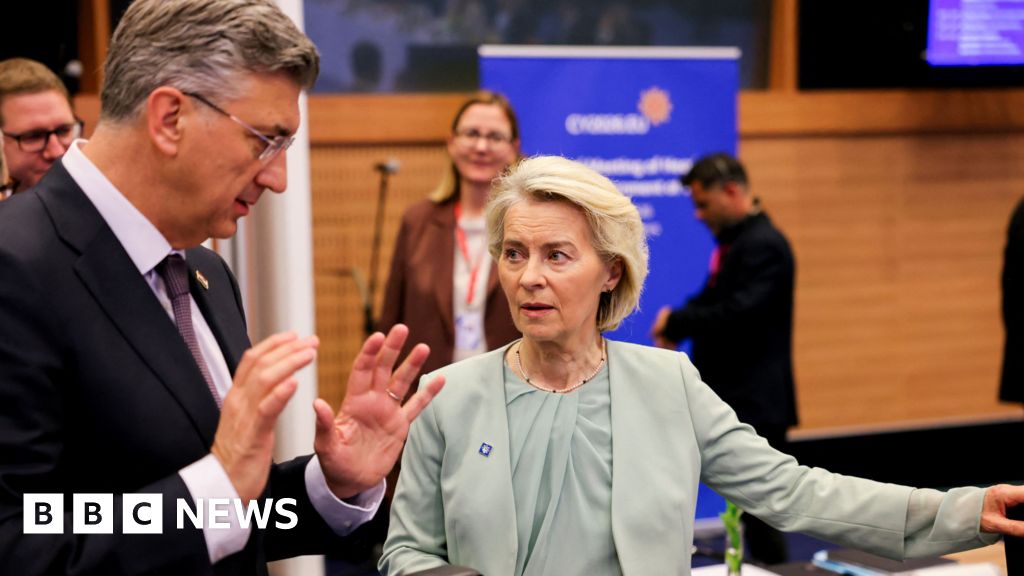
At the EU summit in Cyprus, leaders from across Europe, including the Netherlands, Germany, and Italy, voiced strong support for Spain. Dutch Prime Minister Rob Jetten emphasized that Spain remains a full NATO member and highlighted Europe’s ongoing efforts to strengthen the alliance, which aligns with US interests.
Italian Prime Minister Giorgia Meloni, despite her previous close ties with former US President Donald Trump, criticized the tensions as "not at all positive" and rejected US military use of Italian bases for operations against Iran. Meloni also condemned Trump’s derogatory remarks about the Pope, signaling a shift in European public opinion away from Trump’s approach.
"Spain is a member of NATO. And I see no reason why that should change."—High-ranking German official
Ad
Broader Transatlantic Strains and NATO’s Future at Stake
The leaked email also hinted at US reconsideration of support for the UK’s claim to the Falkland Islands, reflecting broader frustrations with European allies perceived as insufficiently supportive of US policies. British Prime Minister Keir Starmer’s cautious stance on military involvement in Iran has drawn sharp criticism from Trump, further straining relations.
Meanwhile, Eastern European NATO members, particularly those bordering Russia, express growing concern over the alliance’s cohesion and the US’s commitment to collective defense. Poland’s former Prime Minister Donald Tusk questioned whether the US would honor its Article 5 obligations in the event of an attack, underscoring the alliance’s fragile state.
- US delays delivery of critical weapons to Estonia, raising security concerns
- French President Macron accuses Trump of undermining NATO’s unity
- NATO Secretary Jens Stoltenberg warns alliance’s survival is uncertain without renewed cohesion
- European leaders explore EU’s mutual defense clause as a backup to NATO’s Article 5
Ad
Looking Ahead: Navigating a Complex Transatlantic Relationship
Despite the tensions, NATO’s former Secretary General Jens Stoltenberg stresses the alliance remains vital for US and European security, highlighting the combined economic and military strength of member states. However, public disputes and unilateral US threats risk eroding trust and cooperation at a time when unity is crucial against external threats like Russia.
European leaders are cautiously seeking ways to maintain defense collaboration while asserting their own strategic priorities, including diplomatic approaches to Iran. The upcoming NATO summit will be a critical test of whether the alliance can overcome internal divisions and reaffirm its collective commitment in an increasingly volatile global landscape.