Daring Helicopter Rescue Recovers Human Remains from Crocodile-Infested River in South Africa
Police officer risks life to retrieve remains of businessman swept away by floodwaters

LAT Editorial Team

Ad
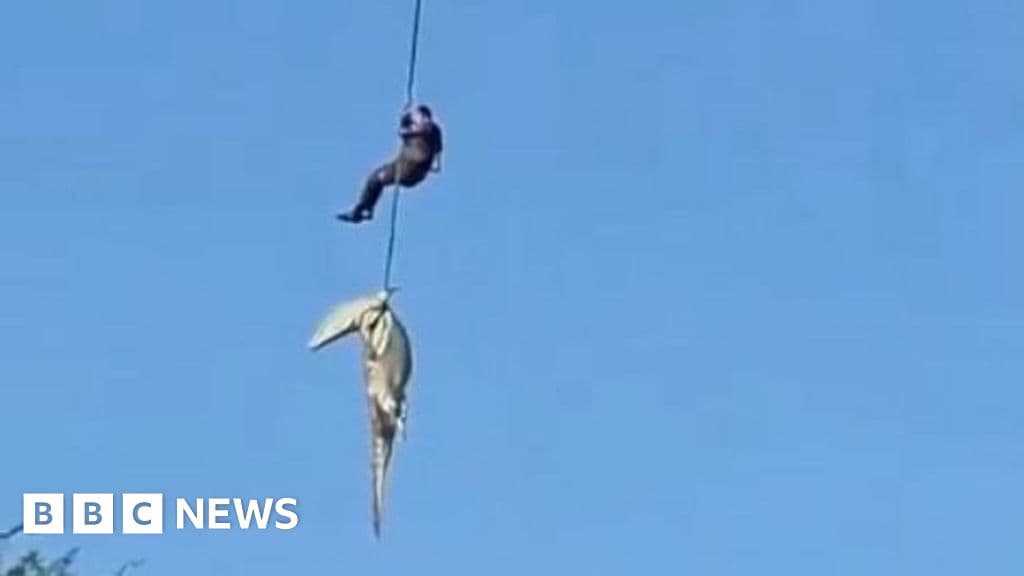
In a perilous and unprecedented operation, South African police successfully recovered human remains from a massive crocodile after a businessman was swept away by floodwaters last week. The recovery involved lowering a police officer from a helicopter into a crocodile-infested river, highlighting the extreme dangers faced during the search.
This operation not only underscores the risks emergency responders take but also sheds light on the deadly impact of recent floods in the region. Authorities are now conducting DNA tests to confirm the identity of the remains, while the incident raises awareness about the challenges of rescue missions in wildlife-rich environments.
Ad
The High-Stakes Search in the Komati River
The businessman’s car was found stranded on a low bridge over the Komati River in South Africa’s northeast, after heavy flooding. When police arrived, the vehicle was empty, leading to fears he had been swept away by the strong currents. The search quickly escalated into a complex operation involving drones, helicopters, and specialized diving units.
Ad
Spotting the Crocodile: A Grim Discovery
During aerial surveillance, officers spotted a small island where several crocodiles were basking. Captain Johan “Pottie” Potgieter, commander of the police diving unit, noted that one crocodile appeared unusually lethargic with a distended belly, suggesting it had recently fed. This observation was critical in identifying the reptile suspected of having consumed the missing man.
Ad
A Dangerous Recovery Mission
The 4.5-meter, 500-kilogram crocodile was first killed to allow for a safe recovery operation. Potgieter was then lowered by rope from a helicopter into the crocodile-infested waters to secure the animal. The operation was described by police as 'highly dangerous and complex,' with Potgieter admitting the nerve-wracking nature of approaching such a formidable predator.
Ad
Revealing the Remains and What Lies Ahead
The crocodile was transported to Kruger National Park, where human remains were found inside its intestines. Alongside body parts, six different types of shoes were discovered, which could indicate the crocodile may have attacked others, though it is also known to swallow various objects indiscriminately. DNA testing is underway to confirm the identity of the remains.
"The sharp-end of a crocodile is not the best place to approach it," said Captain Johan Potgieter, reflecting on the perilous nature of the mission.
South Africa’s acting police chief, Lt-Gen Puleng Dimpane, praised Potgieter’s bravery, highlighting the courage required for such life-threatening operations. This incident also draws attention to the ongoing challenges posed by natural disasters and wildlife interactions in the region.