Revolutionary Map of Mouse Nose Unveils Hidden Order in Sense of Smell
Groundbreaking research reveals precise organization of olfactory receptors in mice, challenging previous assumptions.

LAT Editorial Team

Ad
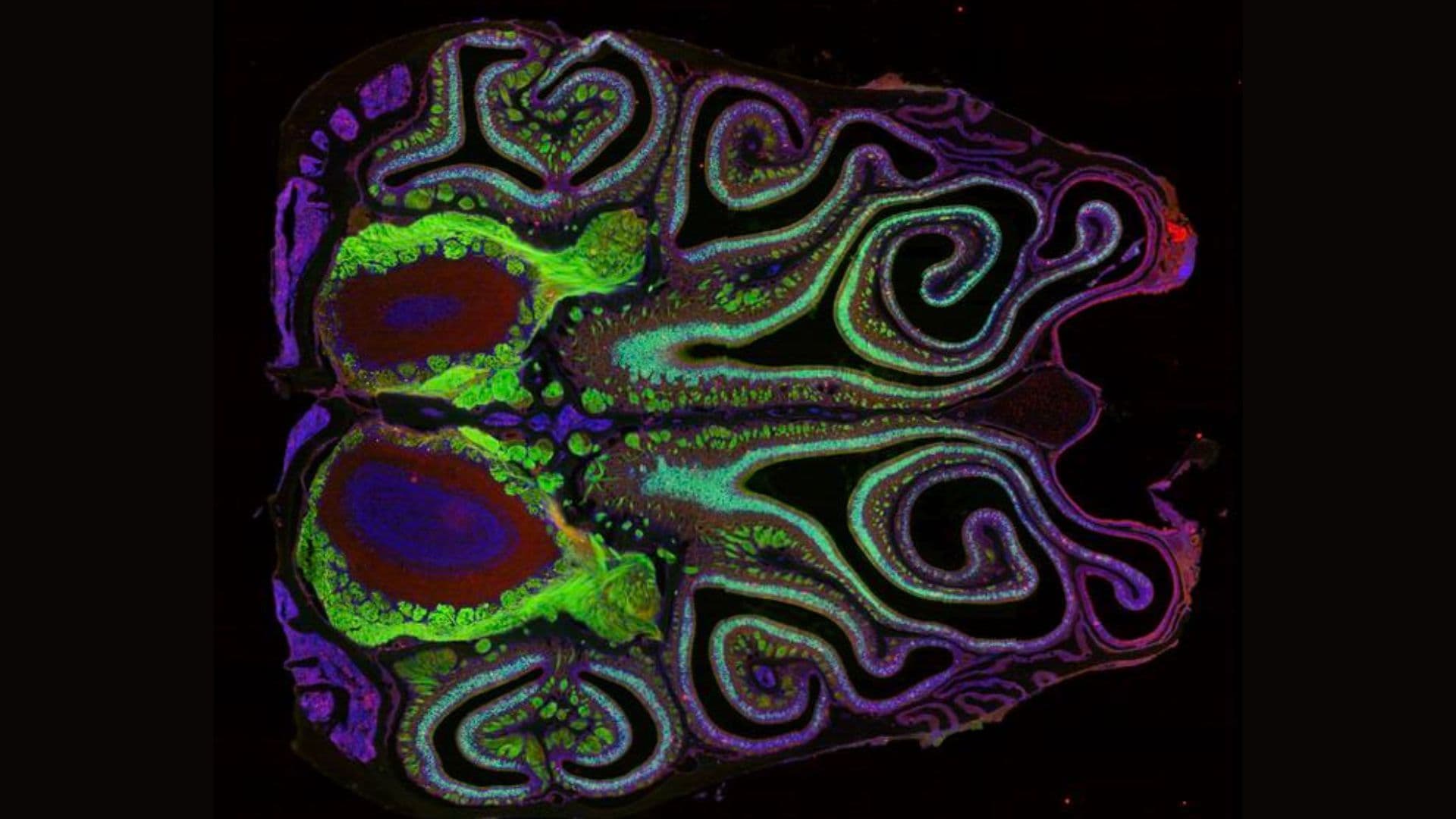
Scientists have unveiled the first comprehensive map of smell receptors in the mouse nose, revealing a surprising and intricate organization. Contrary to the long-held belief that olfactory receptors are randomly scattered, this new map shows that receptors are arranged in tightly packed, overlapping bands based on receptor type.
This discovery sheds new light on how the sense of smell operates, offering insights that could influence future research on human olfaction and potential treatments for smell loss, a condition linked to depression and other health issues.
Ad
Unveiling the Hidden Structure of Smell Receptors
Olfactory sensory neurons in the mouse nose each express one of over 1,100 distinct receptors, each tuned to detect different odors. Previously, these receptors were thought to be randomly distributed across the nasal lining. However, by analyzing millions of neurons from hundreds of mice using advanced single-cell sequencing and spatial transcriptomics, researchers discovered that these receptors form a highly organized pattern of narrow, overlapping stripes.
Ad
Cutting-Edge Techniques Reveal the Smell Map
The team, led by Dr. Sandeep Datta of Harvard Medical School, employed single-cell sequencing to identify which receptor each neuron expressed, and spatial transcriptomics to pinpoint their exact locations within the nose. This approach allowed them to create a detailed map showing the precise spatial arrangement of over 1,100 receptor types, revealing a thousand distinct stripes of receptor expression.
"The map in the nose is precisely aligned with the map in the brain," said Dr. Datta, highlighting the remarkable coordination between the nasal receptors and the brain's olfactory bulb, where smell information is processed.
Ad
Molecular Guidance and Consistency Across Mice
The study also identified retinoic acid (RA) as a key molecule guiding neurons to express the correct receptor based on their position. Manipulating RA levels caused shifts in the receptor map, suggesting it plays a crucial role in organizing the olfactory system. Remarkably, the spatial arrangement of receptors was consistent across all lab mice examined, indicating a genetically programmed blueprint.
- Mouse noses contain about 20 million olfactory neurons.
- Each neuron expresses one receptor from over 1,100 types.
- Receptors are arranged in overlapping stripes rather than randomly.
- Retinoic acid influences receptor positioning.
- The nasal receptor map aligns with the brain’s olfactory bulb map.
Ad
Implications for Human Smell and Future Research
While humans have fewer olfactory receptors than mice, the fundamental organization principles may be similar. Understanding this could pave the way for new treatments addressing smell loss and its associated health risks. The researchers are now investigating why the receptor stripes are arranged in their specific order and whether humans share this precise olfactory map.
"We don't know much about whether these basic principles we're learning about in the mouse apply to humans," Dr. Datta noted, emphasizing the potential for future breakthroughs in sensory neuroscience.
Ad
Looking Ahead: Unlocking the Mysteries of Smell
This pioneering map of the mouse olfactory system opens new avenues for exploring how smells are detected and processed. As scientists delve deeper into the molecular and spatial organization of smell receptors, the findings could revolutionize our understanding of sensory perception and lead to innovative therapies for olfactory disorders.