Full Moon and High Tide Create Stunning 'Brushstroke' Sediment Patterns in Indonesia's Rokan River
A 2024 satellite image reveals how lunar tides transform a river mouth into a natural masterpiece.

LAT Editorial Team

Ad
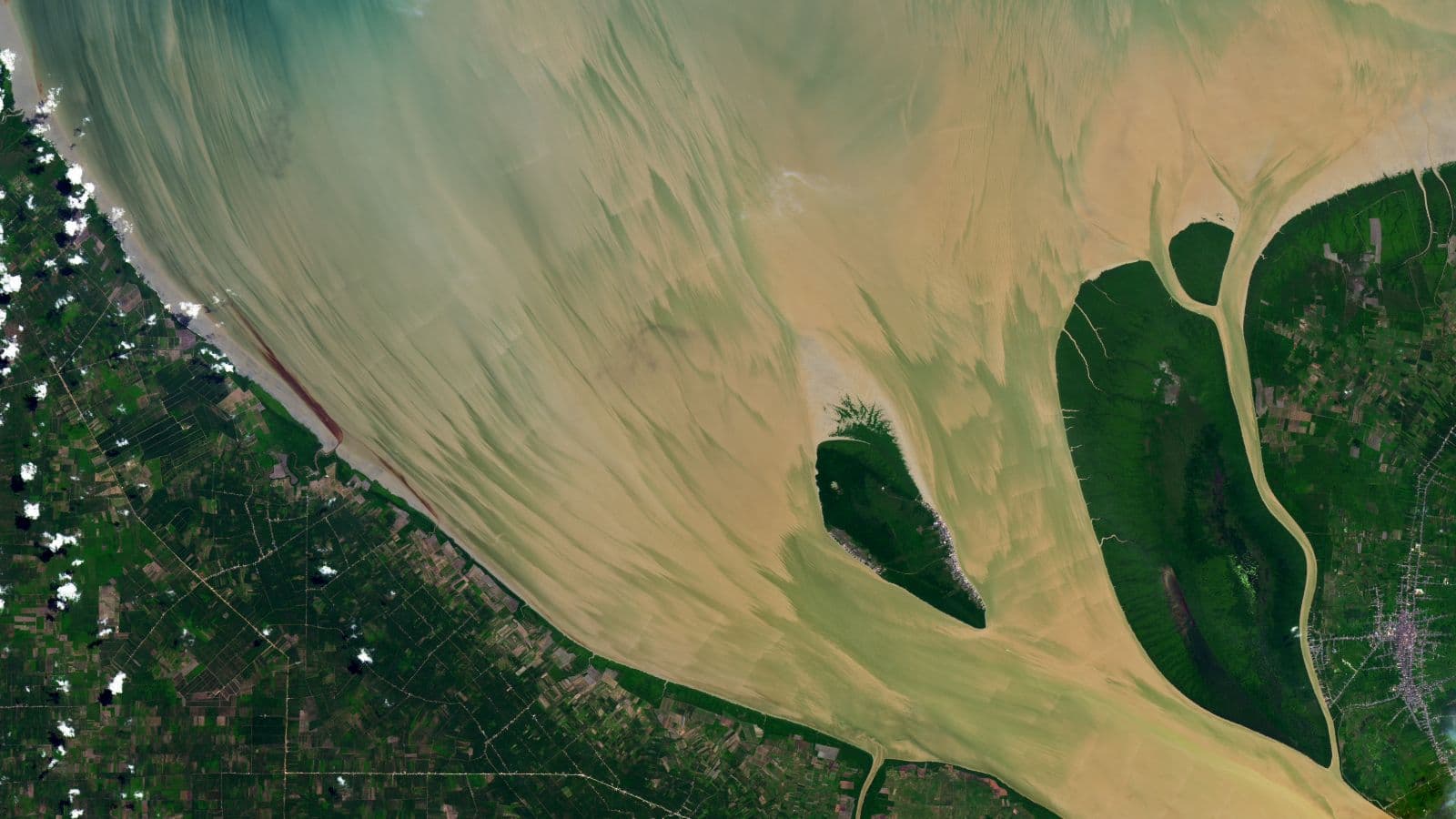
A captivating satellite photo captured in June 2024 showcases striking brushstroke-like sediment patterns at the mouth of the Rokan River in Sumatra, Indonesia. These vivid streaks were formed by an exceptionally high tide coinciding with the full 'Strawberry Moon,' a phenomenon that amplifies tidal forces.
This natural spectacle not only highlights the dynamic interaction between lunar cycles and river sediment but also offers insight into how tidal forces shape estuarine landscapes, influencing sediment transport and shoreline growth in one of the world's largest islands.
Ad
How the Full Strawberry Moon Amplifies Tidal Forces
The full moon in June, known as the Strawberry Moon, aligns the sun and moon's gravitational pull, creating a 'spring tide' with water levels rising up to 16 feet (5 meters) higher than usual. This powerful tidal surge was captured by NASA's Landsat 8 satellite, revealing sediment patterns that resemble brushstrokes across the river's estuary.
Ad
The Rokan River: A Dynamic Waterway in Sumatra
Stretching approximately 220 miles (350 kilometers), the Rokan River flows from the Barisan Mountains to the Strait of Malacca. Its waters carry abundant sand and silt, giving the river a characteristic yellow hue. The tidal ebb and flow constantly stir these sediments, which are then swept out to sea during high tides, creating the vivid patterns seen from space.
Ad
Tidal Bores and Sediment Transport: Nature’s Powerful Sculptors
The Rokan River experiences a regular tidal bore—a rare, powerful wave that travels upstream during high tides. This phenomenon plays a crucial role in moving sediments back upriver, reshaping the estuary. Studies have shown that such tidal activity contributes to the shoreline near Halang Island expanding by about 220 feet (67 meters) annually.
Ad
What This Means for Estuarine Environments and Future Observations
The interplay of lunar cycles, tides, and sediment transport not only creates breathtaking natural art but also drives significant ecological and geological changes. Monitoring these patterns via satellite imagery helps scientists understand estuarine dynamics and predict how coastlines may evolve amid changing environmental conditions.